Industrial Barcode ID Badges: Maximizing Warehouse Throughput in Canada
The Hidden Bottleneck in Your Supply Chain
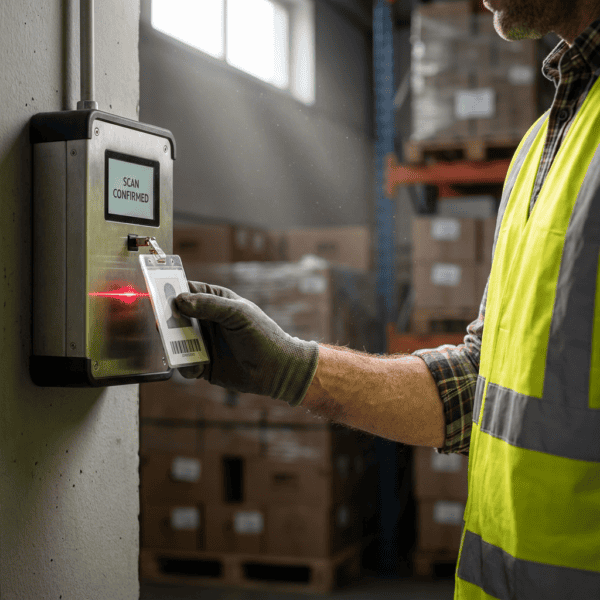
n the massive logistics hubs of the Greater Toronto Area (GTA), the Port of Vancouver, and the Calgary distribution corridors, efficiency is measured in seconds. Every motion, from picking a pallet to loading a long-haul truck, is tracked via a scan. Yet, one of the most common productivity “leaks” in Canadian warehousing is one of the smallest items in the facility: The Employee ID Badge.
If a worker has to scan their badge four times because the barcode is faded, or if they have to physically remove their badge from a holder to get a “read,” you aren’t just losing time—you are losing data integrity and compounding micro-frustrations across your workforce.
This guide explores why High-Definition Retransfer ID Badges are the essential tool for modern logistics.
1. The Physics of the Scan: Why Print Quality Matters
Most industrial environments rely on either laser scanners or image-based “Area Imagers” (like those from Zebra or Honeywell). These devices require high contrast ratios to function correctly.
The Pitfalls of "Fuzzy" Barcodes
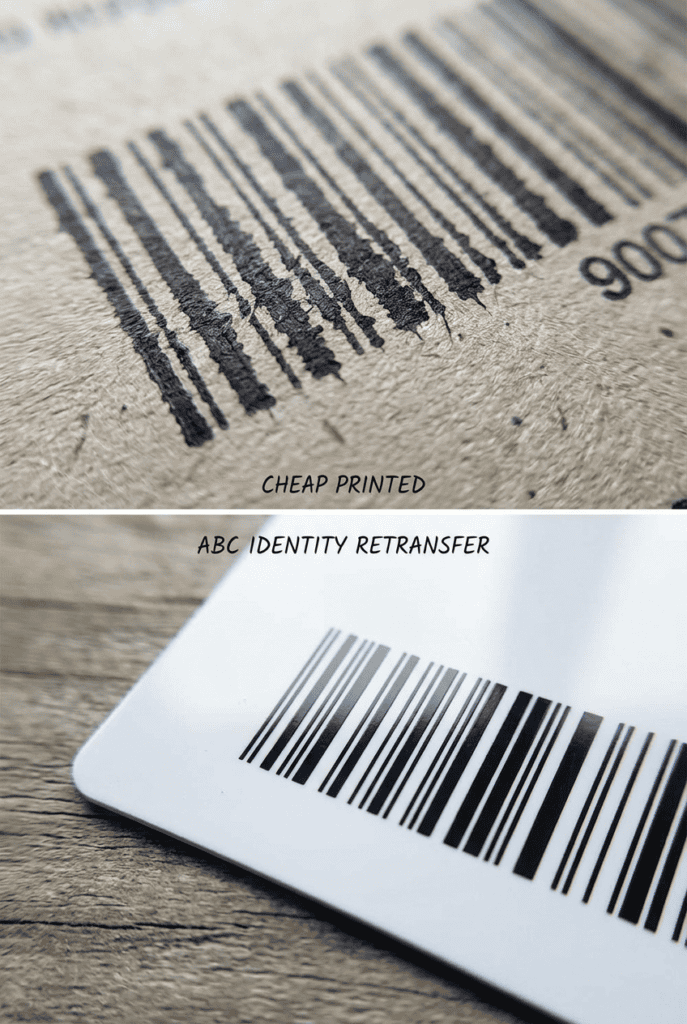
Standard “Direct-to-Card” (DTC) printers often struggle with pure black saturation. Because they apply ink directly to the plastic, the edges of the barcode lines (the “bars” and “spaces”) can bleed slightly. To the human eye, it looks fine. To a high-speed scanner, it looks like a blur.
The Retransfer Advantage
Retransfer printing technology, as utilized by abc identity SOLUTIONS, prints the barcode onto a clear transfer film at a much higher density before bonding it to the card. This results in:
- Crisp Line Definition: No “ink bleed,” ensuring the scanner can instantly distinguish between the bars.
- Deep Black Saturation: Provides the maximum possible contrast against the white background of the card.
- Over-the-Edge Printing: Allows the barcode to be placed anywhere on the card without the “white border” common in cheaper printing methods.
2. Vertical vs. Horizontal: The Ergonomics of Warehousing
In a warehouse, an ID badge isn’t just for show; it’s a mobile data point. The switch to vertical ID badges in the logistics sector is driven by ergonomic necessity.
"Tap-and-Scan" Workflows
Warehouse employees often wear heavy safety vests and gloves. When a badge is oriented horizontally, it is prone to “snagging” on racking or conveyor belts. Furthermore, when a worker reaches for a wall-mounted scanner or a forklift-mounted terminal, a vertical badge hangs in a way that naturally presents the barcode to the scanner.
Reducing Physical Strain
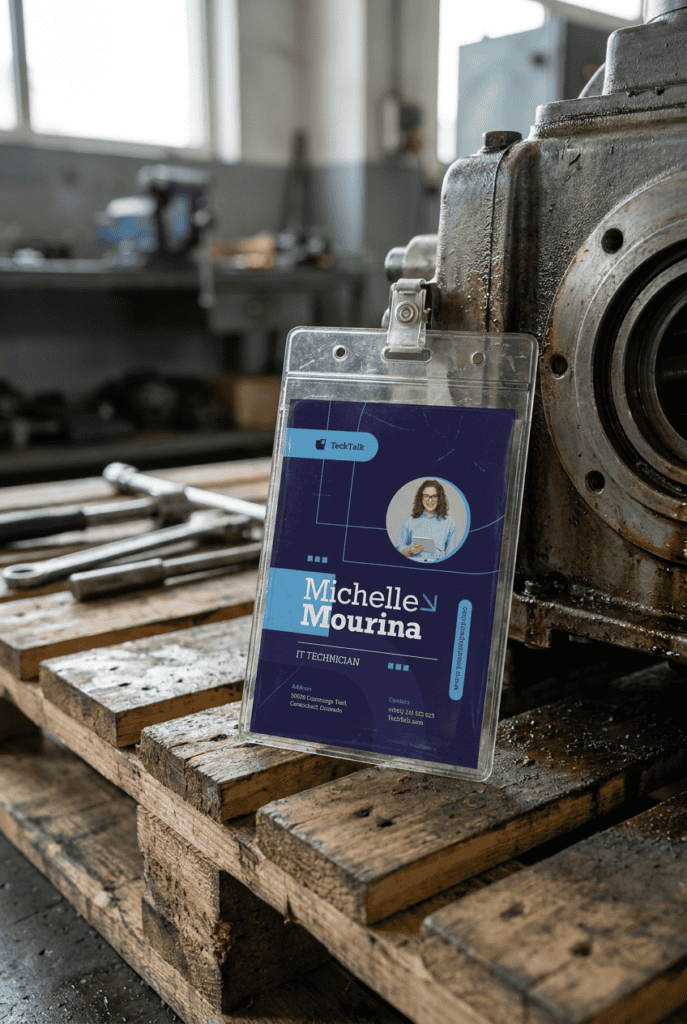
By placing the barcode or QR code on the bottom third of a vertical badge, the worker only needs to lift the badge a few inches to align with a scanner. Over a 10-hour shift involving hundreds of scans, this reduction in repetitive motion is a key factor in employee wellness and speed.
3. Durability in Harsh Industrial Environments
The Canadian climate poses a unique challenge to warehouse infrastructure. Distribution centers often fluctuate in temperature—from the “Deep Freeze” of cold-chain food storage to the high-heat humidity of a manufacturing floor in July.
Resistant to Abrasion and Chemicals
In a warehouse, badges are exposed to:
- Dust and Grit: Which acts like sandpaper on the surface of the card.
- Friction: Constant rubbing against safety vests.
- Chemical Exposure: Forklift hydraulic fluids, cleaning solvents, and grease.
Since retransfer technology “sandwiches” the barcode between layers of durable film, the data is protected from physical wear. A scratched barcode is a dead barcode. Retransfer ensures the barcode lasts as long as the employee does.
4. The QR Code Revolution: Moving Beyond 1D
While the traditional 1D barcode is the standard for clocking in and out, many Canadian logistics firms are moving toward QR Codes (2D Barcodes).
Why QR Codes?
QR codes can hold significantly more data than a standard barcode. Logistics managers are now using QR codes on badges to:
- Equipment Certification: A supervisor can scan an employee’s badge to instantly see if they are certified to operate a specific reach truck or order picker.
- Safety Checklists: Linking directly to an internal portal where the employee can log their pre-shift safety check.
- Emergency Contact Data: Encrypting vital information that can be accessed in the event of a workplace accident.
5. Case Study: Eliminating the "Double-Scan"
The Client: A 150,000 sq. ft. third-party logistics (3PL) provider in Mississauga, Ontario.
The Problem: The client was using entry-level DTC badges. Scanners were failing to read badges 15% of the time, leading to manual data entry and “bottlenecks” at the start of every shift and lunch break.
The Solution: Implement a Vertical Retransfer Badge system with high-density 1D barcodes and role-based colour coding.
The Result: Scan success rate reached 99.9% on the first attempt. The client reported a “tangible increase in morale” as employees no longer felt frustrated by faulty tech, and “start-of-shift” congestion was eliminated.
6. Sourcing Locally: The "Made in Canada" Advantage
For logistics firms, “Just-in-Time” (JIT) isn’t just a philosophy; it’s a requirement. Sourcing ID badges from US-based vendors often leads to:
- Customs Delays: Badges stuck at the border while your new hires wait to start.
- Currency Fluctuation: Unpredictable costs due to the CAD/USD exchange rate.
- Lack of Support: Difficulty in resolving technical printing issues across time zones.
abc identity SOLUTIONS provides a Canadian-made solution. When you order from us, you ensure that your replenishment cards and new-hire badges arrive without the “Border Headache,” keeping your warehouse moving.
ID Badges as a Productivity Tool
In the world of logistics, every detail is an opportunity for optimization. Don’t let a “simple name tag” be the weak link in your technological chain. By investing in Vertical Retransfer Badges, you are investing in the speed, accuracy, and professional image of your facility.
Optimize your warehouse today. Email abc identity SOLUTIONS to request an industrial-grade sample badge.
Table of Contents
Centralized vs. Decentralized Badge Printing for Healthcare
Centralized vs. Decentralized Badge Printing in Healthcare? Let Someone Else Handle It. Let’s be real for a second. If you’re managing a hospital department, a
5 Must-Have Features for Trades ID Badges
5 Must-Have Features for Trades ID Badges That Actually Work on Site Forget flimsy paper badges or faded clips. On a busy job site, your
Centralized vs. Decentralized Badge Printing
Centralized vs. Decentralized Badge Printing: Which One Actually Fits Your Team? Let’s be honest: the last thing you want is an ID badge system that
QR Code Badges: Your Pocket Digital Workstation
Stop Your ID Badge from Being Lazy: Turn It Into a Digital Workstation Let’s be real. Your employee badge has one job: get you through